A note on this investigation
Crypto Leaks collects and publishes covertly recorded video footage in the public interest, in accordance with the laws of the jurisdictions in which the recordings are made. This case contains no new recordings; its evidence is a New York Times article, the court record, the Case 3 recordings and the Times' readers' comments. The people named in this case were not contacted for comment before publication. Where we describe conduct as suspicious or unexplained, we are expressing our opinion that it warrants explanation, not stating that wrongdoing has been proven.
Key findings
- On June 18, 2023, The New York Times published John Carreyrou's profile of the lawyer Kyle Roche, "He Went After Crypto Companies. Then Someone Came After Him." The "someone" is Crypto Leaks; the article insinuates that DFINITY is behind us.
- The article describes a "huge verdict" against Craig Wright; the court's costs ruling named Wright "the prevailing party" on the claims that failed and awarded him costs.
- Roche says he was drugged at a dinner with our reporter, and the Times notes he "has no proof"; at that dinner, on video, he predicted a class action against Solana that his firm filed months later.
- Roche's claims that a finger to his forehead made him invent his statements, and that our video was deepfaked, come with no evidence.
- The article says Roche's life was in danger and he hid in Brooklyn; the threat is fourth-hand, via unnamed people, and in March 2023 Roche tweeted publicly identifying his wife.
- The Times calls Roche "The New Sheriff"; by July 2023 federal judges had removed his former firm from cases it created, including the DFINITY class action.
- When the article ran, the Times was defending a DFINITY defamation suit over its 2021 Arkham coverage and had applied to dismiss it.
Synopsis
In June 2023, The New York Times profiled Kyle Roche, the lawyer whom Crypto Leaks recorded in 2022 describing how his firm sued rivals of its paymaster, Ava Labs. The profile repeated Roche's explanations for what he said on camera: drugged, manipulated, deepfaked, then threatened. It offered no evidence for any of them. It called a court defeat a "huge verdict," called a lawyer whom judges were removing from his cases a "sheriff," and hinted that DFINITY, then suing the Times for defamation, was behind us. This case sets its claims against the record.
Declaration of interest
This case is a response by Crypto Leaks to an article about us. The "Someone [who] Came After Him" in the Times' headline is none other than us, Crypto Leaks, which published Case 3 in August 2022. The article also insinuates, on Roche's say-so, that the DFINITY Foundation is responsible for Crypto Leaks. Our position is the one we stated in July 2023: the article offers no evidence for that claim, and who is behind Crypto Leaks has no bearing on what Roche said on camera. Readers should weigh what follows knowing we are a party.
Background
Case 3, published on August 26, 2022, showed covert video of Roche, then lead partner of Roche Freedman. A lawsuit we obtained showed six partners had been granted AVAX tokens by Ava Labs, developer of the Avalanche blockchain, worth hundreds of millions of dollars at the time. On camera, Roche said the firm's suits were "magnets" drawing the SEC and CFTC away from Ava Labs, and that it brought class actions against other blockchains, including one already filed against DFINITY, developer of the Internet Computer. He predicted another against Solana; the firm filed it months later. Federal judges then began removing the firm from its cases, including, by July 2023, the DFINITY class action. Roche left the firm and has since said his statements were lies he was manipulated into telling. Case 5 and Case 6 are our other cases on Ava Labs.
Separately, in June 2021 the Times had published a report by an unknown company, Arkham Intelligence, accusing DFINITY of dumping ICP tokens on investors. Case 2 showed Arkham associates saying on video that the report was made for a client. DFINITY sued the Times and Arkham for defamation in Manhattan. When the Roche profile ran, that suit was pending and the Times had applied to dismiss it. A publisher is liable to a public figure only for "actual malice," so the credibility of the claims against DFINITY was at issue.
The Times had also been a supporter of Sam Bankman-Fried, who gave millions to politicians, media outlets and crypto publishers, and whom Andrew Ross Sorkin invited to the paper's DealBook Summit. Case 1 found ICP's launch price being set on his FTX exchange; Case 4 covers his Solana holdings and hold over venture funding; Case 10 and Case 12 link him to Arkham and the Times.
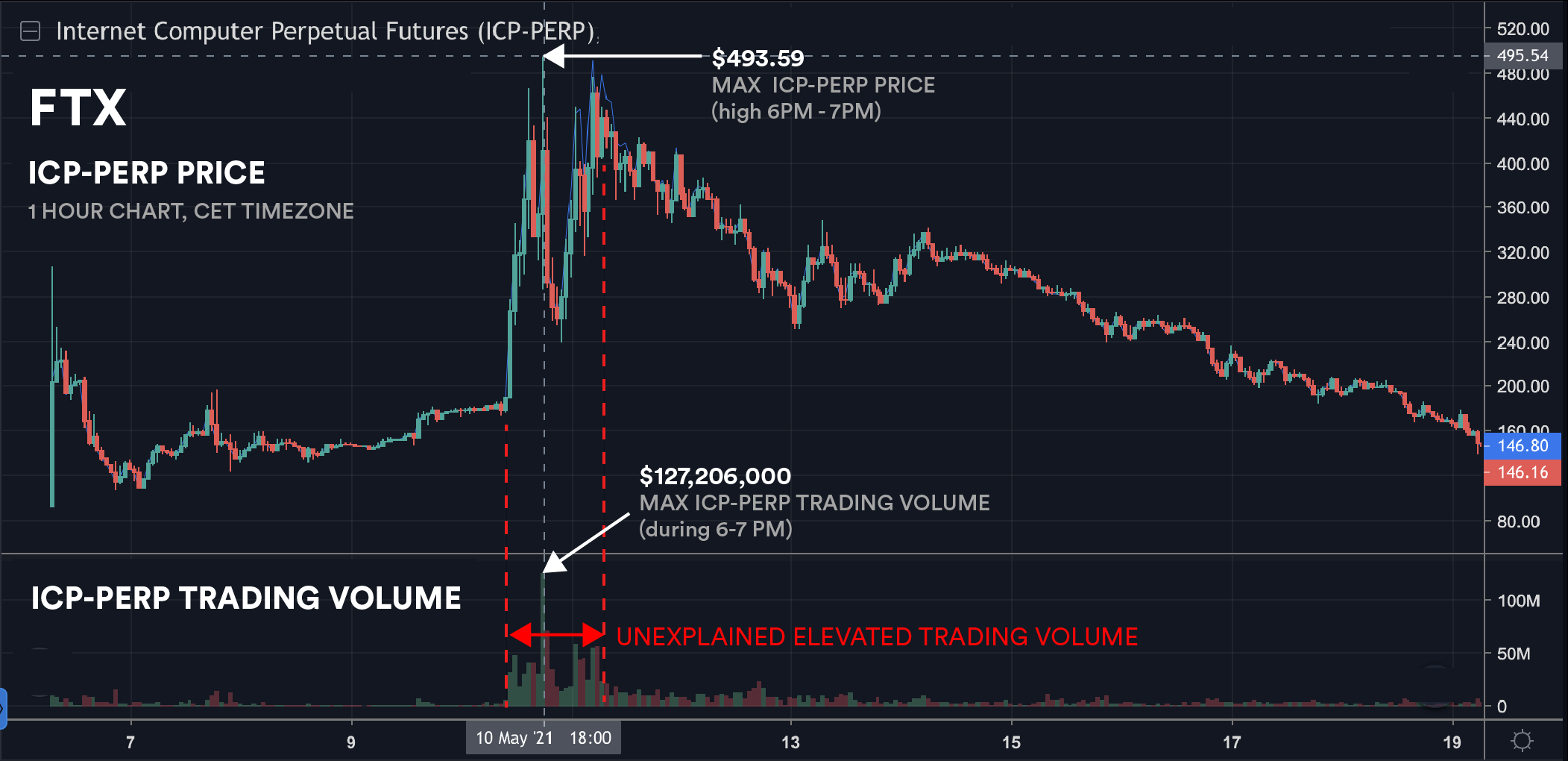
Weeks before crypto twitter exposed the FTX fraud, Andrew Ross Sorkin was on CNBC calling SBF the “JP Morgan of crypto.” No shame pic.twitter.com/rrPh4twkWt
— Nick Tomaino (@NTmoney) November 25, 2022
What the Times said, and what the record shows
The article is archived here.
| What the Times said | What the record shows | Source |
|---|---|---|
| Roche won "a huge verdict against the man who claimed to have invented Bitcoin," Craig Wright. | The suit recovered no money from Wright. The judge named Wright "the prevailing party" on the failed claims and awarded him costs; quoted below. | Kleiman v. Wright, docket |
| Roche "was felled by his own loose lips … But he also was the victim of an elaborate international setup." | Roche volunteered his statements at two meetings, the first in the office of Christian Ager-Hanssen, to whom he was pitching his litigation-finance start-up, Ryval. | Case 3 |
| "Mr. Ager-Hanssen pressed his index finger to Mr. Roche's forehead … he took it as a cue to sell himself harder." | No evidence is offered that a touch made an experienced lawyer invent a detailed account of his firm's conduct that matched a lawsuit and payment schedule we obtained independently. | Times article; Case 3 exhibits |
| At dinner, "Mr. Roche recalls Mr. Ager-Hanssen arriving … and sitting at a nearby table with a tall blond man." | Ager-Hanssen was not present at the dinner, or anywhere near it. | Crypto Leaks, as a party present |
| "He now believes the drink was laced with a drug, though he has no proof." | Nothing was put in Roche's drink. At that dinner he predicted the Solana class action his firm filed months later, called juries "10 idiots" and described how he could bamboozle judges on blockchain. | Case 3 dinner recordings |
| The dinner videos contain deepfake alterations made with artificial intelligence. | No evidence of alteration is offered. The recordings are unaltered. | Case 3 |
| "A friend of one of his colleagues … had heard rumors at a crypto event that Mr. Roche's life was in danger … Mr. Roche and his fiancée hunkered down … in Brooklyn." | The threat is fourth-hand, from unidentified people at a conference; no names or photographs were taken. On March 16, 2023, Roche publicly tweeted identifying his wife. | Roche's tweet |
| "The New Sheriff": "Regulators didn't seem to be doing anything about it, so Mr. Roche decided he would." | By July 2023 federal judges had removed his former firm from cases it created. On camera Roche called its suits "magnets" drawing regulators away from Ava Labs. It also sued Ledger, a hardware-wallet maker, after its customer list was hacked. | Case 3; Finance Magnates |
| The DFINITY suit "alleged that a British entrepreneur, Dominic Williams, and entities he controlled had swindled investors out of billions of dollars." | These are the 2021 class-action allegations, built on the Arkham report. Two years on, no supporting evidence had emerged; Case 2's recordings indicated the report was made to order. | Case 2; Case 1 |
| Williams "had boldly proclaimed that his Internet Computer blockchain … would supplant the big cloud services offered by Amazon and Microsoft." | The founder has stated that the network's mission is to host a majority of the world's systems and services; the technology was built by hundreds of researchers, cryptographers and engineers. | DFINITY public statements |
| "A Series of Clues": DFINITY and Williams may be behind Crypto Leaks. | No evidence is offered. Who is behind Crypto Leaks has no bearing on what Roche said on camera, which the courts that removed his firm had before them. | Times article; Case 3 |
The "huge verdict"
Roche's firm sued Wright for a deceased business partner's estate and half-brother. The costs ruling says:
| “ | I find that it is a prevailing party and entitled to recover its taxable costs. And, given that Mr. Kleiman did not succeed on any of his claims and W&K did not succeed on five of its claims, I find that Dr. Wright is the prevailing party as to those claims and thus, he is entitled to an award of costs as well. |
The full docket is at courtlistener.com.
The dinner and the Solana prediction
The recordings are the test of the drugging story. At dinner Roche predicted that his firm would bring a class action against Solana for Ava Labs; it filed one months later. A drugged or invented account does not predict a lawsuit that is then filed. Hours earlier, in Ager-Hanssen's office, Roche had already volunteered the statements that sank him.
Hiding in Brooklyn
The Times photographed Roche before the Brooklyn Bridge to illustrate the period he says he spent in hiding. It does not say the threat was real; it retells the story as a thriller.
1. DFINITY is a large research organization; the article offers nothing linking it to a threat.
2. If a plan to harm him was overheard, no names were recorded and no photographs taken.
3. On March 16, 2023, while on his account he feared for his safety, Roche published a tweet publicly identifying his wife.
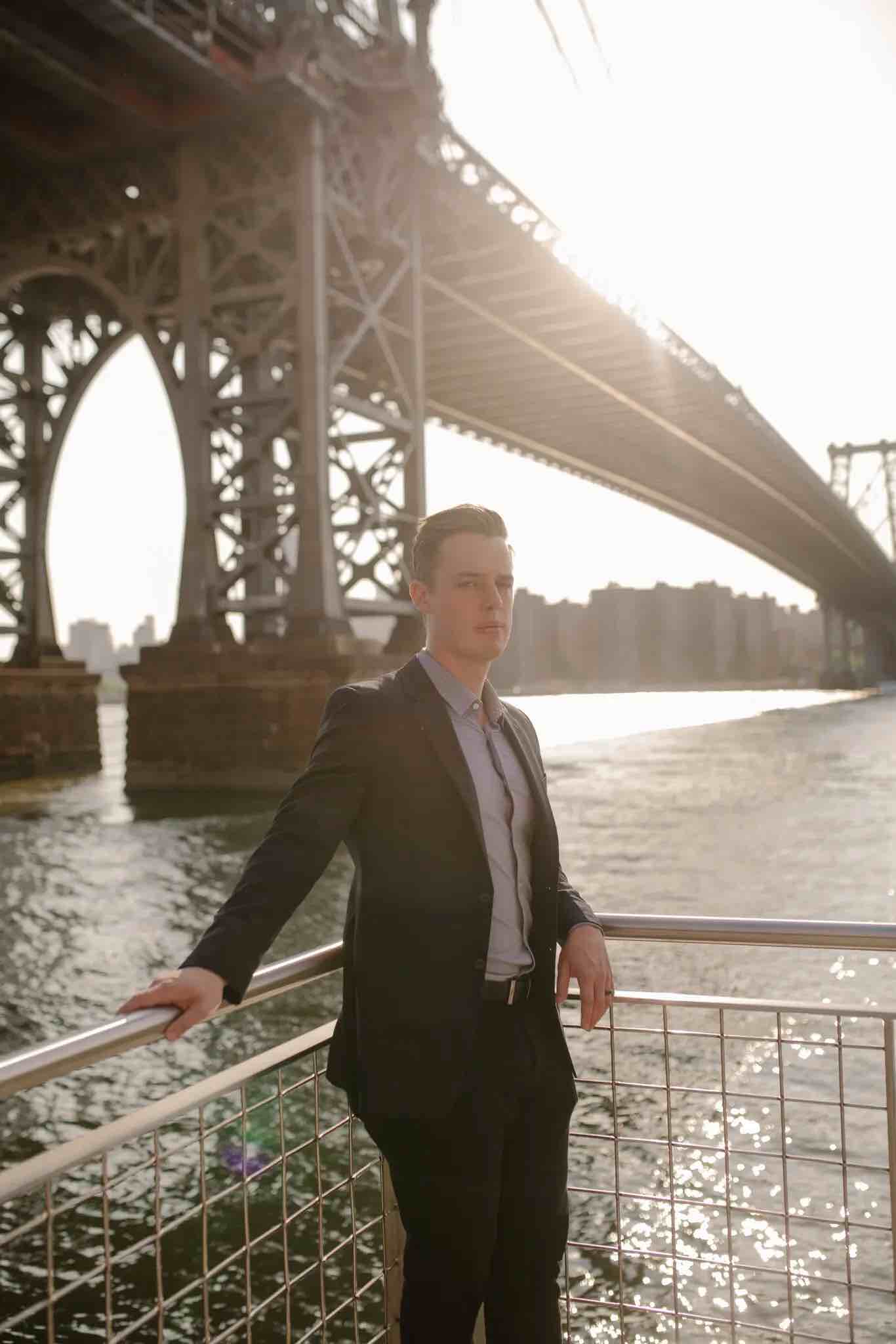
The article's opening portrait:

What Times readers said
Many of the paper's own readers noticed the gap between story and evidence. Eight comments:


Why the Times ran it
We cannot know what goes on inside The New York Times. The sequence is a matter of record: Arkham's report in June 2021; Case 2 and DFINITY's suit in June 2022; and in June 2023, with its motion to dismiss pending, a profile that treated the report's allegations as live, called the lawyer who sued on them a sheriff, and floated the idea that DFINITY was behind the site that had exposed both.
Our view: the profile reads less like reporting on Roche than like an effort to shore up claims the Times was being sued for publishing, and to discredit the plaintiff. If the Times believed Roche, it should have published the evidence.
What happened next
- By July 2023: Roche had left the firm, which renamed itself Freedman Normand Friedland (Law360). Judge Katherine Polk Failla had removed it as interim class counsel in the Tether and Bitfinex class action on October 13, 2022 (Bloomberg Law), and on May 8, 2023 Judge James Donato refused to let the renamed firm lead the class action it had brought against DFINITY (order; Law360). (Case 8, August 29, 2023.)
- Before November 2025: DFINITY's defamation suit against the Times and Arkham was dismissed before trial for failure to plead actual malice, and the dismissal was affirmed on appeal in July 2024 (opinion; appeal), as reported in Case 12. Case 2 carries a special section setting out the evidence the court never weighed, the complexities of the case, and what difference that evidence would have made.
- Before November 2025: Roche publicized his purchase of "Buffalo's most expensive home" and let the address be made public, as reported in Case 12; local reporting recorded the $3.5 million sale of 50 Tudor Place as a city record (WKBW; Buffalo Toronto Public Media).
- By November 2025: the firm formerly known as Roche Freedman had been disbanded, according to Case 12.
What later cases revealed
When first published, this case said we "now believe" Arkham's report was "possibly commissioned by Sam Bankman-Fried himself." That was inference. Later cases replaced it with recorded testimony and a documented payment. This section was added in October 2026.
- Case № 10Nov 2023
Arkham's founders were in Bankman-Fried's circle. Former Arkham staff said on video that its CEO and CTO knew FTX's Gary Wang from the San Francisco hacker-house scene, that Alameda Research was a customer, and that Arkham's leadership was with Bankman-Fried in the Bahamas the day before FTX collapsed. Read Case 10, since reworked as Case 12.
- Case № 11Oct 2024
Ava Labs' general counsel said Roche "must have been drunk." A former Ava Labs communications director said on video that after Case 3 the general counsel, Lee Schneider, tried to wave off Roche's admissions by saying he must have been drunk, adding "I wouldn't be surprised if this sinks them." Roche's own client did not reach for drugs or deepfakes. Read Case 11.
- Case № 12Nov 2025
Arkham paid "FTX's PR people" about $275,000 a year before it had a product. Arkham's former chief growth officer said on video that the company paid M Group, FTX's PR firm, reported to have worked closely with Andrew Ross Sorkin, "a quarter of a million dollars every year" while "they hadn't even launched." Whether that channel carried the ICP report to the Times remains open. Case 12 also records the dismissal of DFINITY's suit and Roche's Buffalo purchase. Read Case 12.
By November 2025 the record showed the Times' original source had been paying FTX's PR firm, that its founders were close to Bankman-Fried, and that the suit which might have tested the Times' conduct ended without a trial.
What must happen now
- The New York Times: publish the evidence, if any, for the claims about Crypto Leaks and DFINITY its article attributed to Roche, or correct the record.