A note on this investigation
Crypto Leaks collects and publishes covertly recorded video footage in the public interest, in accordance with the laws of the jurisdictions in which the recordings are made. The people named in this case were not contacted for comment before publication. Where we describe conduct as suspicious or unexplained, we are expressing our opinion that it warrants explanation, not stating that wrongdoing has been proven.
Key findings
- On June 28, 2021, The New York Times published two pieces promoting the "Arkham ICP Report," which accused the DFINITY Foundation of dumping ICP tokens on investors. Arkham Intelligence had no track record and one publicly listed employee, 21-year-old Miguel Morel.
- Arkham's corporate records do not match its public profiles. The company was formed in Delaware in March 2021, yet its Twitter account claims a 2019 creation date and Morel's LinkedIn says he joined in January 2020. Its first tweet appeared on the day the Times articles ran.
- On covert video, people working with Arkham say the report was produced for a client, and one describes the client as a business rival of the Internet Computer. Morel publicly denied being hired or compensated.
- An Arkham associate says on video that the work was funded by the billionaire investor Tim Draper, whose family holds large positions in competing cryptocurrencies.
- Morel's only prior experience was at Paradigm Academy, an offshoot of Leverage Research, an Oakland group that former members have described as a cult. Emails attributed to an Arkham associate living at the company's London house appear to show anti-Semitic remarks.
- After publishing the report, Arkham moved from rural Texas to a Chelsea house rented at £32,500 a month and published nothing further for more than a year. The source of its money was unexplained.
Synopsis
In June 2021, The New York Times lent its name to a report from a company nobody had heard of, written by a founder with no relevant experience, accusing the developers of a major blockchain network of defrauding investors. Our investigation found a firm whose dates did not add up, whose people had come out of a group described as a cult, and whose own associates said on tape that the report was made to order. This case asks why the Times published it.
The report and the Times
The Internet Computer network launched on May 10, 2021, after years of development by the DFINITY Foundation, a Swiss not-for-profit with research centers in Zürich, San Francisco and Palo Alto. At launch, its ICP token traded above $450, giving the network a fully diluted valuation of around $230 billion. The price then fell. By June 28 it was around $50, a valuation comparable to other networks at the time. Case 1 examines how the launch price was set and asks whether it was manipulated on the FTX exchange.
On June 28, a previously unknown company, Arkham Intelligence, published the "Arkham ICP Report." Its central claim was that DFINITY and insiders had executed a "rug pull": setting a high launch price and then dumping tokens on retail investors. The report did not ask why the launch price was so high, or whether a price that high would fall on its own. It did not mention that Bitcoin had lost more than 40 percent in the weeks after May 10, dragging most tokens down with it. By all accounts, DFINITY sold no ICP for weeks after launch, and its founder has said he sold only a small fraction of his holding.
The same day, The New York Times published "The Dramatic Crash of a Buzzy Cryptocurrency Raises Eyebrows" and pushed a DealBook newsletter item headed "How ICP's Vaunted I.C.O. Crashed" to its subscribers. The pieces described Arkham as a "crypto analysis firm" and linked directly to the report's PDF. They repeatedly called the network launch an "initial coin offering," a fundraising practice regulators have long targeted. It was nothing of the kind.
Arkham's Twitter account had about 200 followers that morning. Morel's promotional video, narrated over the soundtrack of a true-crime documentary, had been viewed almost 20,000 times by May 2022. In it he says the price fall "was not a coincidence or accident, but was a case of misconduct by those who seem closely connected to ICP." The Times gave that claim a worldwide audience.
After this case was published, DFINITY complained to the Times, which removed "I.C.O." from its newsletter headline, and then sued the Times and Arkham for defamation; the suit is set out below. The edit conceded the point without saying so: there had been no initial coin offering, a fundraising practice regulators target, and the headline had been written as though there were. Neither the Times nor Andrew Ross Sorkin, whose byline carried the coverage, has commented on the evidence below.
A firm whose dates do not add up
Arkham Intelligence was formed in Delaware on March 4, 2021, three months before the report. Its registered address was a house in the countryside outside Austin, Texas. It had, so far as anyone could tell, one employee.
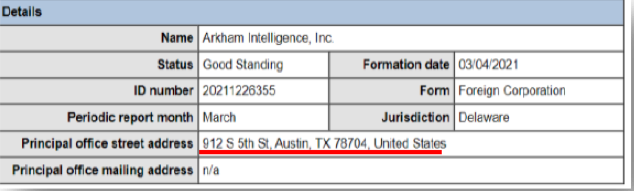
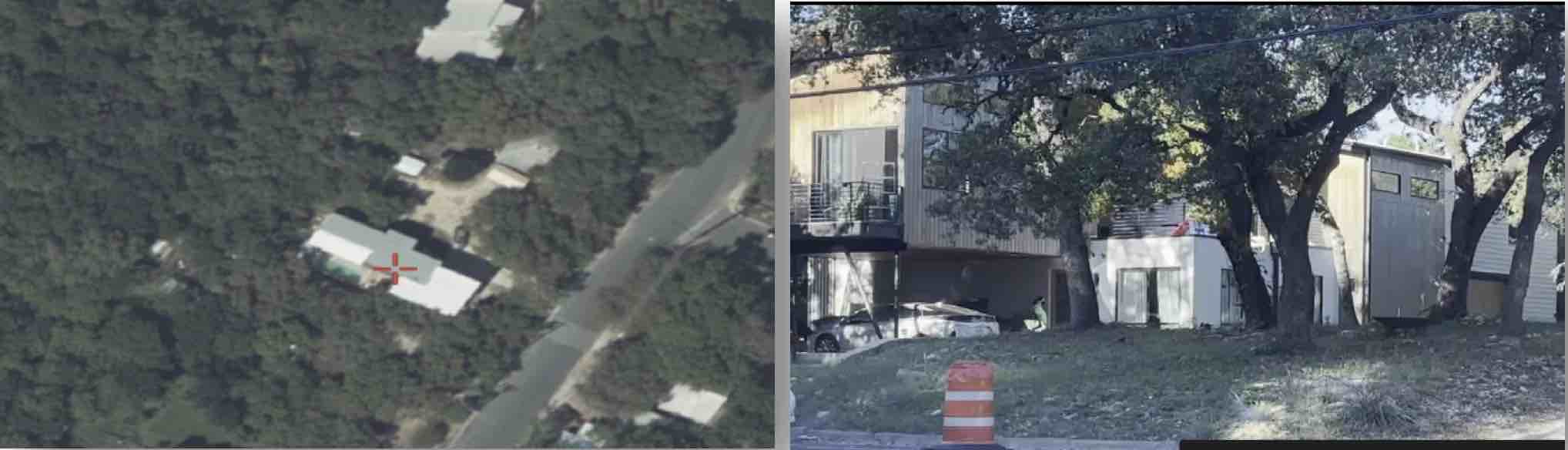
The public record disagrees with the company's own story. Arkham's Twitter profile says the account was created in May 2019, almost two years before the company existed. Its first tweet appeared on June 28, 2021, the day the Times articles ran. Morel's LinkedIn profile says he joined Arkham in January 2020, a year before incorporation. One reading is that an old account was bought and renamed for the launch; we cannot say for certain. What is certain is that none of these inconsistencies would have survived a routine check by a newspaper.
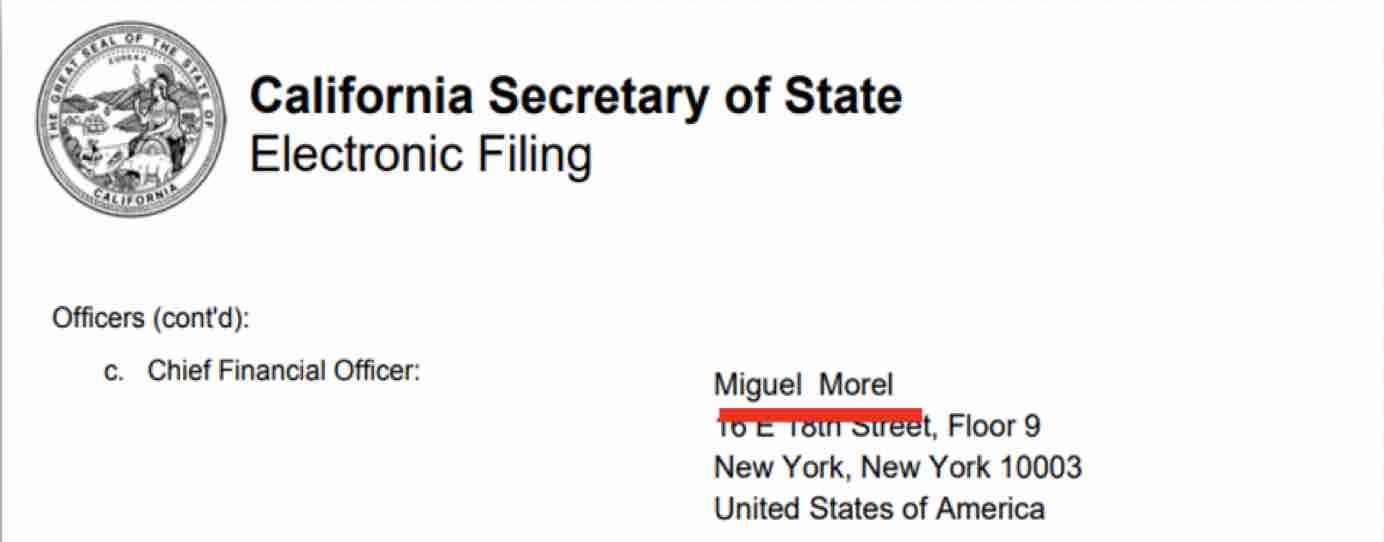
Arkham is registered in Delaware, California, New York and Colorado, an unusual footprint for a company with no product. After the report, the team left Texas for a house in Chelsea, London, advertised at £32,500 a month. Where the money came from is not explained by anything the company has published.

Who wrote the report
Miguel Morel
At publication, Morel was 21. His LinkedIn profile listed high-school graduation, some college courses, and a stint from June 2017 to January 2019 as "Entrepreneur in Residence" at Paradigm Academy, a coaching and training center. Our research found that most of Paradigm's staff and students had come from Leverage Research, an Oakland organization whose stated aim was to understand "group psychology to lead people to live in harmony together."
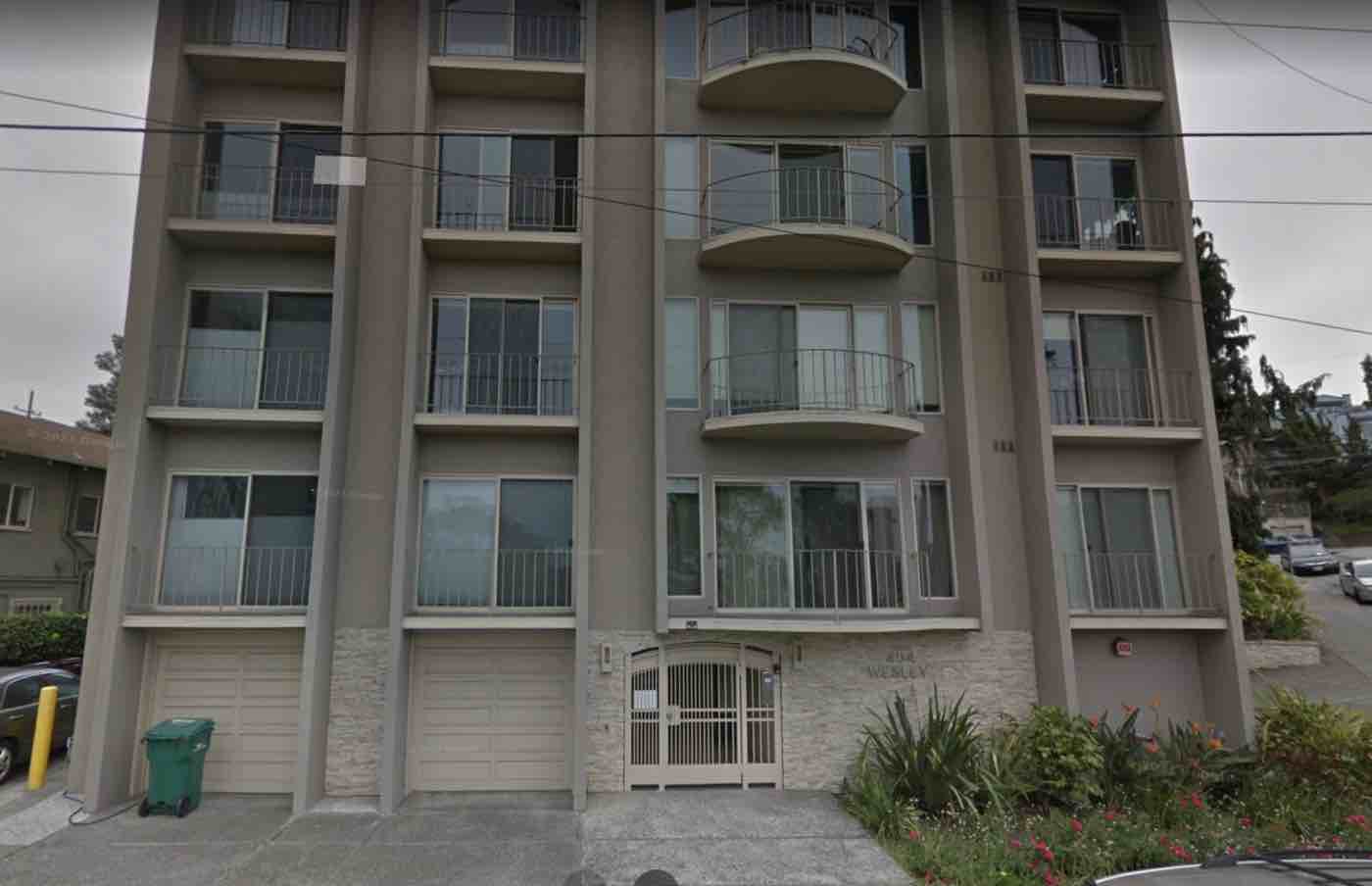
Former members have described Leverage as a cult. Zoe Curzi wrote that the experience left her "confused or overwhelmed" in a way nothing else in her life had, and that members who left suffered psychological distress and post-traumatic stress. Another former member, Cathleen, described her time there as "somewhere between painful and horrifying." We make no claim about Morel's own experience. We note that it was his only listed experience before founding a "crypto analysis firm" whose first output accused a large engineering organization of fraud.
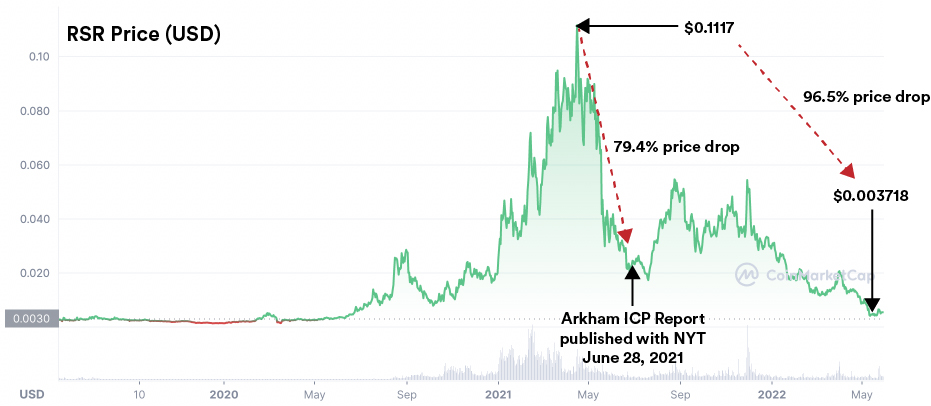
Morel also describes himself as a co-founder of Reserve, a stablecoin project on Ethereum. Reserve removed references to him from its website shortly after the Arkham report appeared, though a page from March 2020 supports the claim. The connection matters for two reasons. It means Morel had financial interests in crypto when he wrote the report, which he did not disclose. And Reserve's own RSR token fell almost 80 percent in the same weeks the report blames on ICP insiders, which the report does not mention.
The team at the Chelsea house
At Arkham's London address we identified Morel together with Henry Fisher, former chief of staff at Reserve and now Arkham's chief technology officer; Charlie Smith, a co-founder of Arkham and formerly head of business development at Reserve; Jonah Bennett, a journalist and co-founder of an online magazine that employed several Arkham staff; Zachary Lerangis, head of operations; and Keegan McNamara, a former Arkham technical program manager. All were in their early twenties. Three had come from Reserve. Two had already left Arkham for other start-ups, which is some indication of how fluid the "firm" was.
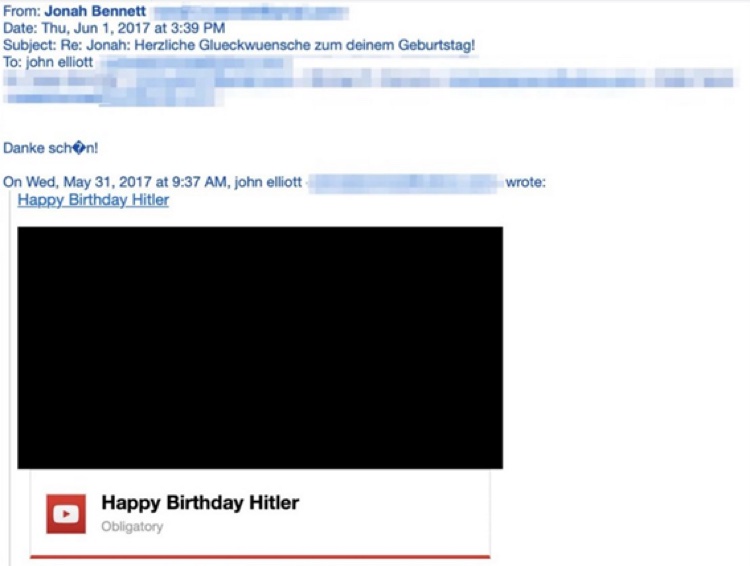
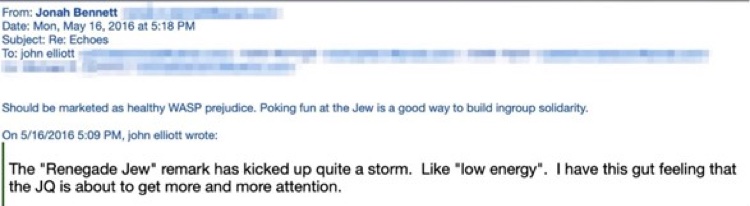
Bennett's home address was Arkham's registered place of business. Emails attributed to him, reproduced below, appear to show him celebrating Hitler's birthday and referring to "the JQ," an abbreviation of "the Jewish Question" used in Nazi propaganda. We do not know whether the Times was aware of any of this when it described Arkham as a crypto analysis firm.
What Arkham's people said on tape
A few days after the Times coverage, Morel tweeted that he had not been "hired or compensated to release this report," and held no position in ICP. It was his last tweet for a long time.
These questions still remain unanswered. I was not hired or compensated to release this report, nor did I or any of the entities I own have any position in $ICP.
— Miguel Morel (@RealMiguelMorel) July 3, 2021
Investors deserve to know what’s going on.
Read the full report here: https://t.co/8g3Ja9BCXu https://t.co/Ct3IOHryvG
Our investigators recorded conversations with people working with and around Arkham. The recordings are presented in the order that builds the picture. In each, the speaker is talking about the ICP report and the company that produced it.
Clip 1 · Longosomething was off from the start
Clip 2 · Longohe believes a client paid for the report
Clip 3 · Bennettwhy the report was produced, first of three
Clip 4 · Bennettwhy the report was produced, second
Clip 5 · Bennettwhy the report was produced, third
Clip 6 · Longothe client was a "business rival"
Clip 7 · Longothe report's claims were not built on a proper foundation
Asked whether the report's conclusion was a certainty or an educated guess, Longo chose the second, and described the data Arkham still wanted before it could be sure.
Clip 8 · Longoasked whether the report's conclusion was a certainty or an educated guess: "we would like to get to a point where it's more of a certainty"
| “ | We would like to get to a point where it's more of a certainty, and, like, we are quite confident that analysis for ICP would... we would like to have more supporting information, so, you know, using time zones, or using... just pulling in more data on who each of those people are transacting with. |
The Times had presented the same conclusion as established fact a month before Arkham had the data its own associate said it needed.
Taken together, the recordings describe a report produced to order, for a party with a commercial interest in the outcome, by people who did not themselves believe the analysis was sound. The report's method supports that reading. It seized on a number of large ICP transfers and presented them, without context, as insiders selling. It never asked why the launch price was so high, nor whether a price that high could do anything but fall.
Who funded Arkham
Morel has said the report was unsolicited and written for the benefit of the community. In the three clips below, Longo says the work was done with funding from Tim Draper. Draper is an American billionaire with large holdings in Bitcoin and in a range of other cryptocurrencies; his son Adam's fund, Boost VC, invests across the same landscape. Whether the Drapers saw the Internet Computer as a threat to those holdings, and whether anyone in that circle directed or sponsored the report, are questions we raised in 2022 and could not answer. We still cannot.
Clip 9 · Longothe work was done with funding from Tim Draper, first of three
Clip 10 · Longothe Draper funding, second
Clip 11 · Longothe Draper funding, third
Comings and goings in Chelsea
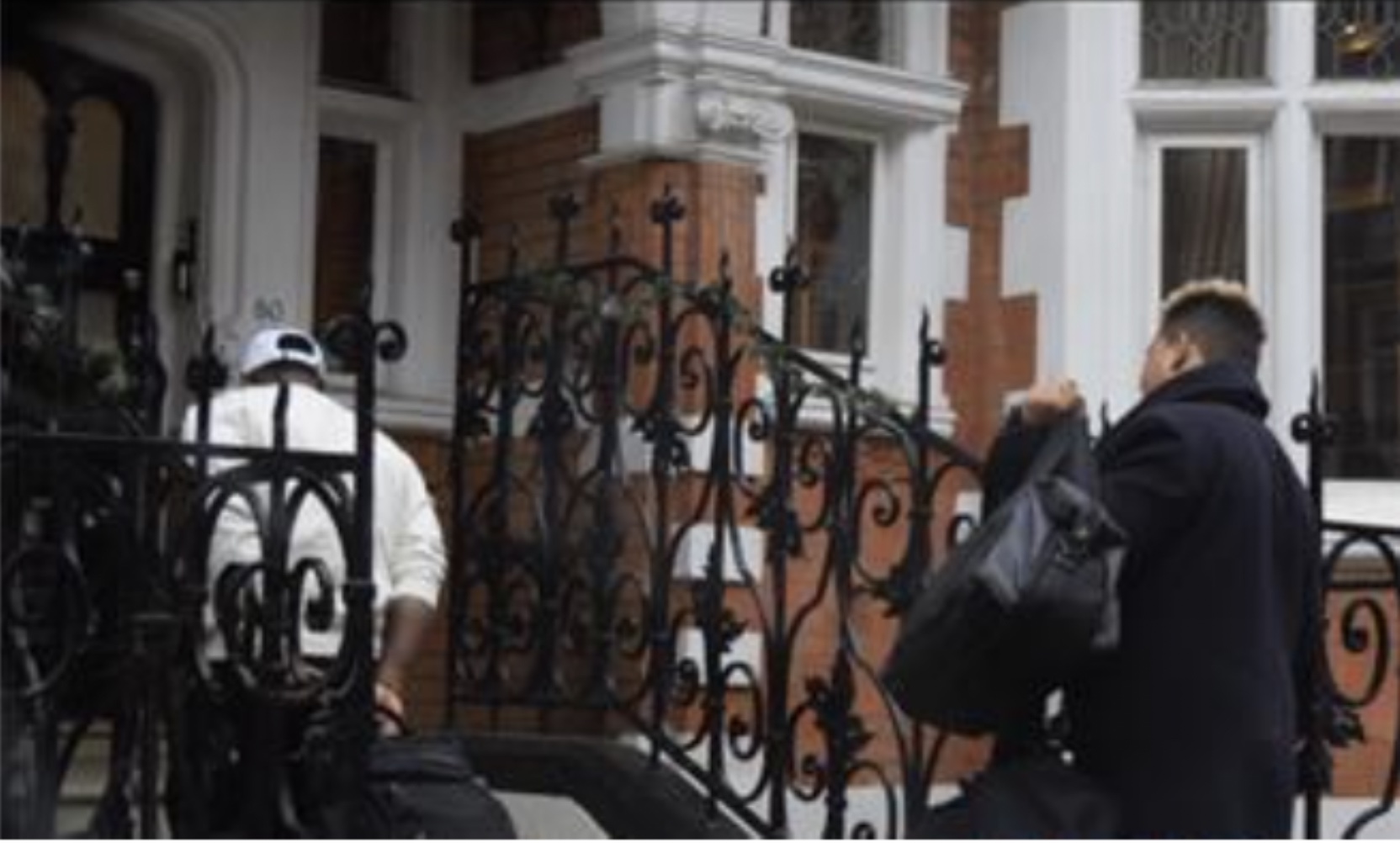
Over several days we filmed the Arkham house. Packed holdalls arrived by taxi and were carried inside by men who scanned the street as they did so. Morel himself arrived with bags on more than one occasion, accompanied by a bodyguard. We do not know what the bags contained, and we draw no conclusion from the footage beyond this: it is not how a four-month-old research firm usually behaves.
Clip 12 · Footageholdalls arriving at the Chelsea house by taxi; Morel with bags and a bodyguard

The harm
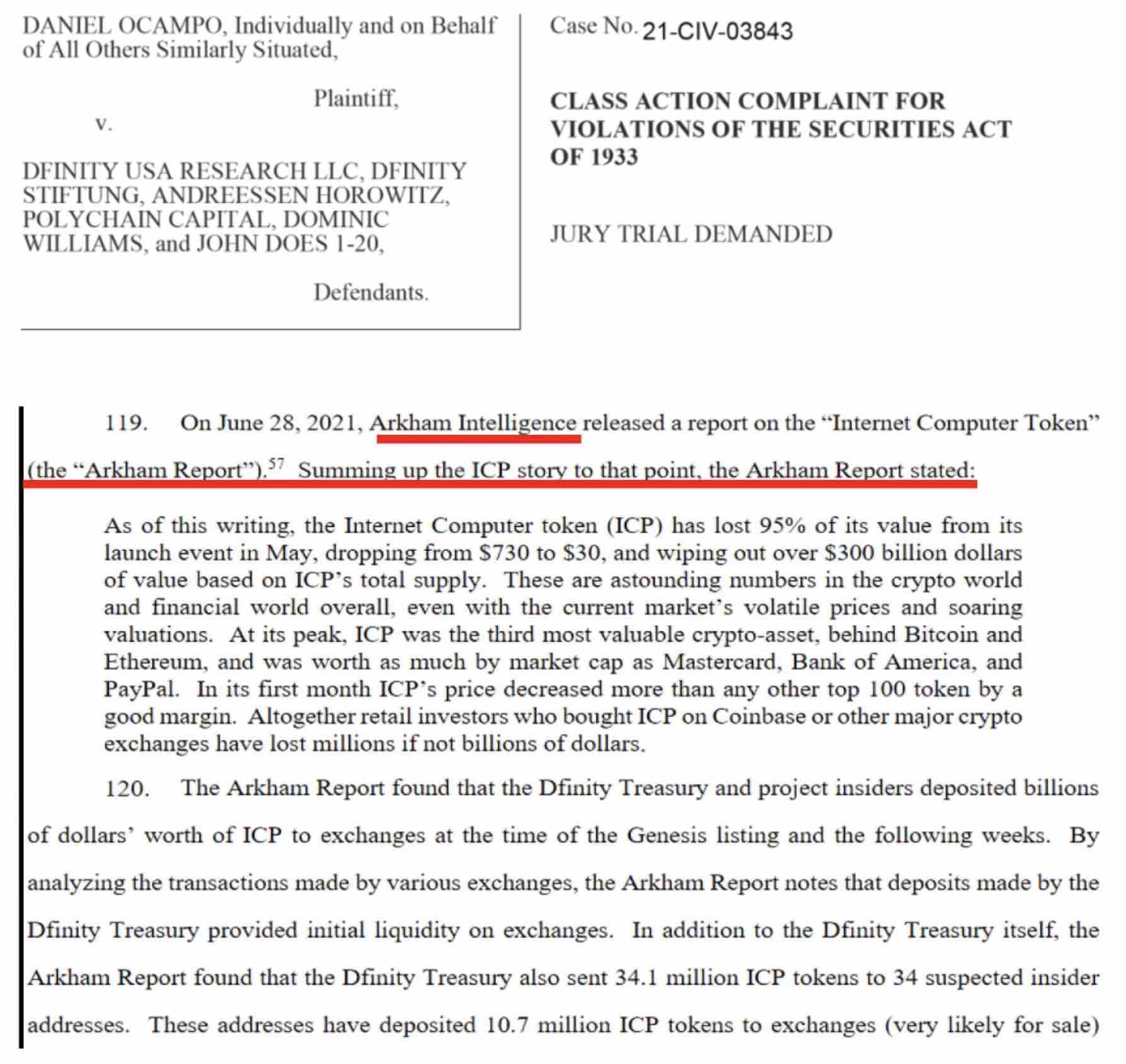
Because the Times endorsed it, the Arkham report was treated as fact by people who then acted on it. Class actions against DFINITY cited the report directly; one is shown below. Social-media campaigns against the project used it as their factual basis for years. Arguably, the coverage cost the network's token holders billions of dollars on top of the fall that had already happened. Whatever the figure, the Times was the multiplier: without it, a 200-follower account's PDF would have reached almost no one.
What we asked of the Times
In June 2022 we asked The New York Times to do three things: explain to its readers why it presented Arkham as a "crypto analysis firm"; publish a correction; and say who brought the report to it, so that the person who commissioned it could be identified. None of this has happened.
The defamation suit, and what the court never weighed
DFINITY sued the Times, Sorkin, his co-author Ephrat Livni and Arkham for defamation in federal court in Manhattan on June 27, 2022, eighteen days after this case was published and a year after the article (complaint). The venue was the Times' home district. The case went to Judge Lewis Kaplan, appointed by President Clinton in 1994 (Federal Judicial Center). DFINITY asked him to step aside because his wife had been a Times reporter from 1969 to 1979. He declined on August 9, 2022, recording in his own order that she draws a pension from the Times' Newspaper Guild plan (order).
The complaint pleaded that the report had been "secretly bought and paid for by wealthy elites" and that the Times had practised "slipshod journalism". In June 2022 that was as far as the evidence went. What stood behind it surfaced later. Case 10, published on November 9, 2023, placed Arkham's founders in Sam Bankman-Fried's circle and in the Bahamas with him the day before FTX collapsed. Case 12, in November 2025, showed Arkham paying FTX's public-relations firm, M Group, $275,000 a year before it had a product, and recorded that M Group was reported to work closely with Sorkin. None of it was before the court. Our research found that DFINITY sought to put the later evidence before Judge Kaplan by amending its filing, and that he did not allow it; the case was decided on the complaint as first pleaded.
Four days after Case 10 appeared, on November 13, 2023, Judge Kaplan dismissed the suit (opinion). He held that the funding allegations were "irrelevant to whether the Arkham Defendants had reason to doubt the accuracy of the Report" and "in any case conclusory", and that "Dfinity has not alleged any information available at the time of publication of the Article and then known to the Times Defendants that showed the Arkham Report or Video to be inherently untrustworthy." The Second Circuit affirmed on July 29, 2024, holding that Arkham's ties to DFINITY's competitors, and its officers leaving the country with cash, did not support an inference of malice "at the time of publication" (appeal No. 23-7838; summary). In January 2025 the Times asked the court to make DFINITY pay more than $100,000 of its legal costs under New York's anti-SLAPP law (MediaPost).
Our view: the ruling answers a narrow question, what the Times had in hand on June 28, 2021, and never reaches the question this case and Case 12 raise, which is why the Times had the report at all. Arkham was four months old, had no product and no track record, and was run by a founder who had co-founded a competitor to the Internet Computer. One telephone call would have established that. If the report reached the Times through the public-relations firm of Bankman-Fried, then the most courted figure in the industry and a subject the paper covered warmly, then publishing it without that call was, in our view, the lowering of a standard for a favoured source, which is what the law means by reckless disregard. The court did not weigh any of this: the evidence came after the complaint was filed, and the attempt to add it was refused. A suit judged on its first pleading, in the defendant's home court, before a judge whose household draws a Times pension, was always going to be judged on the least that was known.
What later cases revealed
This case ended with an open question: who was the powerful third party behind the report and its publication? Our later investigations have gone a long way toward an answer, and have shown what kind of company Arkham became. The section below was added in the October 2026 revision.
- Case № 9Oct 2023
Arkham was willing to break rules for data. An Arkham engineer alleged on video that the company used an exploit to link Binance users' email addresses to their private wallet addresses, and that its CTO acknowledged the method was not legal. Read Case 9.
- Case № 10Nov 2023
Arkham's founders were close to Sam Bankman-Fried. Arkham insiders said on video that Morel and Fisher knew FTX's co-founder Gary Wang from the San Francisco hacker-house scene, that Alameda Research used Arkham's services, and that Arkham's leadership was with Bankman-Fried in the Bahamas the day before FTX collapsed. Bankman-Fried's FTX is where Case 1 found the ICP launch price being set. Read Case 10, which was later reworked as Case 12.
- Case № 12Nov 2025
A $275,000 payment to "FTX's PR people." Arkham's former chief growth officer said on video that the company paid $275,000 to M Group, the public-relations firm that worked for FTX and Bankman-Fried, at a time when Arkham had no product to promote. M Group has said it placed stories in the Times and worked with Andrew Ross Sorkin. Whether that payment relates to the publication of the ICP report is the question Case 12 asks, and it remains open. Read Case 12.
- Case № 13Mar 2026
How Arkham does business abroad. Arkham's head of Turkey was recorded describing bribery of officials, manipulation of financial regulation, and the use of sex workers to win business from the football club Galatasaray, allegedly with the knowledge of the company's American CEO. Read Case 13.
- Case № 14Apr 2026
Sanctions and a fired compliance team. Arkham's former head of sanctions said on video that the company pursued business in EU-sanctioned eastern Ukraine, failed to block users in Iran, and dismissed its compliance team when they refused to sign off. Read Case 14.
The DFINITY Foundation's defamation suit against the Times and Arkham failed on a question of timing, set out above: the $275,000 payment and the Bankman-Fried connections were not known when it was filed, and the court held that nothing known to the Times at publication showed the report untrustworthy. Arkham went on to release a blockchain-analysis product well over a year after the ICP report, and has since moved into running a cryptocurrency exchange. The picture that emerges across these cases is of a company founded in the shadow of FTX, funded by interests that competed with the Internet Computer, and run by people who, on their own account, were prepared to cut corners. The question this case asked in 2022 stands: why did The New York Times publish them?
Video evidence index
Twelve clips are embedded above, in the order they appear. Each entry links to the clip on this page and to its file.
- Longo: something was off from the start file
- Longo: he believes a client paid for the report file
- Bennett: why the report was produced, first of three file
- Bennett: why the report was produced, second file
- Bennett: why the report was produced, third file
- Longo: the client was a "business rival" file
- Longo: the report's claims were not built on a proper foundation file
- Longo: "we would like to get to a point where it's more of a certainty" file
- Longo: the work was done with funding from Tim Draper, first of three file
- Longo: the Draper funding, second file
- Longo: the Draper funding, third file
- Footage: holdalls arriving at the Chelsea house by taxi; Morel with bags and a bodyguard file