A note on this investigation
Crypto Leaks collects and publishes covertly recorded video footage in the public interest, in accordance with the laws of the jurisdictions in which the recordings are made. The recordings presented in this investigation were obtained by investigative journalists operating in a jurisdiction where such recordings are legal. Names used in this article refer to individuals appearing in and identified through video recordings, public records, and corporate filings.
None of the individuals or entities named in this investigation were contacted for comment prior to publication. The allegations described herein are based on statements made in recorded conversations and should be understood as claims that appear to describe potentially illegal activity. We use terms such as "allegedly," "appears to," and "according to the recordings" throughout this article to reflect that these are claims made by the recorded individuals. We express our analysis and opinion based on the available evidence and invite all named parties to make public statements in response.
Key findings
- Dimitri Michaloutsos, Arkham's former global head of sanctions, says on video that CEO Miguel Morel told him: "We need you to get to a yes on this topic because this is a very strategically important region for us to expand our business in."
- According to Michaloutsos, the planned expansion was "specifically targeted" at the Russian-controlled east of Ukraine, which the EU sanctions comprehensively under Council Regulation (EU) 2022/263.
- Michaloutsos says he was told the region was "incredibly lucrative," which he read as a reference to money laundering: "The only people in eastern Ukraine who have money are the people who are looking to launder it."
- According to the recordings, Arkham had no functioning IP controls when Michaloutsos joined, so users in Iran, North Korea and Russia could reach the platform; when he asked how logins from sanctioned jurisdictions were being prevented, he says the answer was "We're working on it."
- On his last day, Michaloutsos says, he had identified about 800 connection attempts from Iran; Arkham's position, as he describes it, was that blocked sign-ins were no violation, whereas "just being able to go to the website in of itself is a violation."
- Michaloutsos says the compliance team was fired after it refused to approve the expansion; LinkedIn data shows all five of its members left between April and May 2025.
- Michaloutsos says Arkham's Danish subsidiary, which employed the engineers building the exchange, brings the whole business under EU sanctions law wherever its other offices sit.
- Morel is a U.S. citizen, so the conduct described may draw scrutiny from the U.S. Treasury's Office of Foreign Assets Control (OFAC) as well as EU regulators; OFAC fined crypto platforms millions of dollars for comparable failures in 2025.
Synopsis
Arkham Intelligence runs a cryptocurrency exchange from a Dominican Republic parent company, with New York offices, a UK arm and a Danish subsidiary, and is backed by some of Silicon Valley's most prominent investors. Its former global head of sanctions, Dimitri Michaloutsos, says on covertly recorded video that the company's product and growth teams asked him to approve products aimed at Russian-controlled eastern Ukraine, a region under comprehensive EU sanctions where, in his words, "the only people who have money are the people who are looking to launder it." He says he warned CEO Miguel Morel and the chief compliance officer directly, and that Morel's answer was: "We need you to get to a yes." He also says that when he joined, Arkham had no working controls to block users in Iran, North Korea or Russia, and that on his last day he had counted about 800 connection attempts from Iran. Michaloutsos says the compliance team was fired when it refused to sign off. LinkedIn data shows that all five of its members left within months.
Who is Arkham Intelligence?
For readers coming to this investigation without the earlier Crypto Leaks cases, a brief overview. Arkham Intelligence first appeared in 2021 with a report attacking the DFINITY Foundation, then went dark for more than a year (Case 2). It re-emerged as a blockchain analytics firm and then a crypto exchange under CEO Miguel Morel. The company completed a $12 million Series A in April 2023 and launched its ARKM token in July of the same year; by April 2026 the token was down 97% from its March 2024 peak. Its early investors have included Sam Altman and Joe Lonsdale. Peter Thiel served as a director until he resigned following the publication of Case 2.
Arkham operates through a layered corporate structure: a Dominican Republic parent company, New York offices, a UK arm, and a Danish subsidiary that houses a significant part of its European engineering team. The Danish entity is central to this investigation, because the presence of EU citizens working on Arkham's exchange products brings the company within the jurisdiction of EU sanctions law.
Arkham initially positioned itself as a transparency-focused platform selling blockchain intelligence tools. After its pivot to running exchanges, it secured a sponsorship deal with the Turkish football club Galatasaray SK, reportedly worth about €3.7 million over two seasons. Case 13 documented, from a different source, allegations that the deal was facilitated through bribery, regulatory capture and the use of sex workers. What follows is a separate body of evidence.
What emerges from this investigation into Arkham's exchange business is a company that, behind the marketing and PR, allegedly operates with a systematic disregard for some of the most basic rules of international financial regulation, and allegedly pursues profit opportunities arising in sanctioned war zones.

The man who said no: Dimitri Michaloutsos
Dimitri Michaloutsos was hired as Arkham Intelligence's global head of sanctions in January 2025. His job, as he describes it, was to build the company's sanctions and anti-money laundering (AML) framework from scratch. His role is documented on LinkedIn; the five-person compliance team he joined is listed below in "The purge".
Clip 1 · Michaloutsosbuilt Arkham's sanctions and AML programs "for about four months", then came "very high-risk products" in "very high-risk jurisdictions"
| “ | I helped them build their sanctions and anti-money laundering programs for about four months. Then I was approached by their product and growth teams about some very high-risk products and some very high-risk jurisdictions that didn't jive well with compliance. |
— Dimitri Michaloutsos, former global head of sanctions, Arkham Intelligence
For four months, that is what he did. Then, he says, the product and growth teams approached him about expanding Arkham's services into eastern Ukraine: specifically, the regions under Russian military control that the European Union sanctions comprehensively. His first reaction, as he tells it, was disbelief.
| “ | I honestly thought that they were joking, and I had to remind them what was going on in eastern Ukraine. And they were, you know, adamant that this was a very lucrative area. |
— Dimitri Michaloutsos
The Danish connection: why EU law applies
Arkham's management may have viewed its Dominican Republic registration as a shield against European regulation. According to Michaloutsos, that view was naive. The Danish subsidiary, which employed the engineers who built and maintained the exchange, anchored the whole operation inside EU jurisdiction.
Clip 2 · MichaloutsosDanish engineers on the exchange: "everything that exchange does becomes Danish", and so "under the purview of the EU"
| “ | You have Danish engineers working on your exchange, your crypto exchange. Everything that exchange does becomes Danish. So, it becomes Danish, it becomes under the purview of the EU. |
— Dimitri Michaloutsos
The implications are significant. Under EU sanctions law, an entity with a material nexus to a member state is bound by the full force of EU restrictive measures. Council Regulation (EU) 2022/263, adopted on February 23, 2022 and expanded since, imposes comprehensive sanctions on the non-government-controlled areas of the Donetsk, Luhansk, Kherson and Zaporizhzhia oblasts of Ukraine. "Comprehensive" means, as Michaloutsos puts it, "nothing in and nothing out if Russia controls it."
Clip 3 · Michaloutsosthe sanctions follow location, not nationality: "it's where you are when you're logging in"
| “ | One of those instances where your physical location is more important than who you are. So it's like, we, I don't care if you're Ukrainian. I don't care if you're Russian. It's where you are when you're logging in. |
— Dimitri Michaloutsos
The framework has been tightened repeatedly since 2022. In February 2025 the EU's 16th sanctions package extended restrictions to crypto-asset service providers. For a company with engineers in Denmark building its exchange, the rules could hardly have been clearer.
"Get to a yes": the push into sanctioned territory
According to Michaloutsos, Arkham's product team came to him with a proposal to launch products and services specifically targeting the Russian-controlled east of Ukraine. He took the request to the chief compliance officer, and together they sat down with Morel to explain why the plan was untenable. The recordings refer to a chief compliance officer without naming him; whether that is Adam Westwood-Booth, listed on LinkedIn as Arkham's head of compliance in the same period, is not established by our evidence.
Clip 4 · Michaloutsosthe proposal to expand into sanctioned eastern Ukraine, and his warning on the legal consequences
He says he laid out the EU regulations, explained that the Danish subsidiary made the whole operation subject to EU law, and cited the specific sanctions frameworks. The CEO's answer, according to Michaloutsos, was not a question about compliance but a demand for a different answer.
Clip 5 · Michaloutsosthe CEO's instruction: "We need you to get to a yes on this topic"
| “ | We need you to get to a yes on this topic because this is a very strategically important region for us to expand our business in. |
— Miguel Morel, CEO of Arkham Intelligence, as quoted by Dimitri Michaloutsos
Arkham's former head of sanctions is alleging, on camera, that the company's CEO told him to find a way to approve expansion into a comprehensively sanctioned territory. According to Michaloutsos, this was not a discussion about risk appetite. It was an instruction.
Clip 6 · Michaloutsoswith the CEO and the chief compliance officer in the room, the decision to go ahead
| “ | They decided that they wanted to move forward with it anyway. |
— Dimitri Michaloutsos
Michaloutsos says both the CEO and the chief compliance officer were in the room when he delivered his assessment. Everyone heard the warning, and, according to his account, they decided to press ahead regardless.
The money laundering question
The sanctions issue was grave enough on its own. Michaloutsos identifies a second, potentially more damaging dimension: the nature of the money in the regions Arkham was allegedly targeting.
Clip 7 · Michaloutsostwo conversations: "a very heavily sanctioned region", and people with "tainted money they're looking to wash"
| “ | The first conversation is it's a very heavily sanctioned region. The second conversation is the people who surround this region are those who have tainted money they're looking to wash. |
— Dimitri Michaloutsos
Pressed further, Michaloutsos is blunt about what the expansion plan meant in practice.
| “ | The only people in eastern Ukraine who have money are the people who are looking to launder it. |
— Dimitri Michaloutsos
On this account, Arkham was not merely pursuing a regulatory gray area. It was allegedly seeking to build products for a market whose primary source of capital was, in its own head of sanctions' assessment, illicit.
Michaloutsos says he brought this analysis to the C-suite. His recommendation was that the risk-reward calculation did not work: the cost of adequate controls would exceed any revenue the market could generate, and even with them the legal exposure would remain severe.
Clip 8 · Michaloutsoshis risk assessment: "not lucrative enough to design the controls", and "the risk benefit reward just wasn't there"
| “ | Not lucrative enough to design the controls that you would need. IP blocking, for example, you would need to IP block down to the street, which you can do, but it's extremely expensive and it fails. The risk benefit reward just wasn't there. |
— Dimitri Michaloutsos
Arkham's leadership allegedly dismissed the analysis. According to Michaloutsos, they signed the compliance memo, acknowledged the risks, and went ahead with the product anyway.
| “ | We read the memo. We don't care. We went forward with product anyway. |
— Arkham leadership, as described by Dimitri Michaloutsos
Two earlier cases bear on this account. In Case 9, two senior Arkham hires said on video that they were forced out in 2023 after objecting that an ARKM token email to U.S. retail investors raised securities-law problems; one was "extremely worried about the SEC," and the company then let its entire U.S. team go. The engineer in that case said of his own work: "They told me that they would pay for the lawyers." In Case 13, Arkham's head of Turkey described a tiered system for talking to Morel: Slack for official business, WhatsApp or Signal for "more sensitive subjects," and face-to-face for the most sensitive matters. A signed compliance memo, as Michaloutsos describes it, is the opposite: a written record that the warning was given.
Iran: the open door
Eastern Ukraine was not the first compliance alarm Michaloutsos raised at Arkham. When he arrived, one of his first actions was to examine the company's IP-blocking controls: the technical safeguards that stop users in sanctioned countries from reaching the platform. What he found, according to his testimony, was that there were no functioning controls at all.
Clip 9 · Michaloutsos"I'm sitting in Iran. How are you preventing me from logging into your system?" "We're working on it."
| “ | I asked the technology and the engineers: 'I'm sitting in Iran. How are you preventing me from logging into your system?' And they were like, 'We're working on it.' And I was like, that's not really something that we can put on the back burner. That's something that a rudimentary version of it needs to exist tomorrow. |
— Dimitri Michaloutsos
This is not a technicality. OFAC has made clear, through a series of enforcement actions, that allowing users in sanctioned jurisdictions to access a platform is a violation whether or not they complete a transaction. In September 2025, OFAC penalized ShapeShift, a digital asset exchange, $750,000 for processing transactions with users in Cuba, Iran, Sudan and Syria across 17,183 apparent violations. In December 2025, Exodus, a non-custodial wallet provider, settled for $3.1 million after allowing users in sanctioned jurisdictions to access its services.
Michaloutsos himself cites the Amazon precedent: in 2020, OFAC settled with Amazon for $134,523 after the company failed to block orders from persons in Crimea, Iran and Syria. As he notes, the theoretical maximum penalty in that case was over $1 billion.
Clip 10 · Michaloutsoseven reaching the landing page from a sanctioned jurisdiction is a violation
| “ | Just being able to go to the website in of itself is a violation. |
— Dimitri Michaloutsos
The scale of Arkham's apparent exposure became clear, he says, on his last day at the company.
Clip 11 · Michaloutsos"about 800 pings to Iran" identified on the morning he left
| “ | I left, the morning I left Arkham, I had identified about 800 pings to Iran. And their justification for it was, well, they can't act. It's their tiered level of access. But the fact that Arkham wasn't doing it was almost laughable because they were moving money, and they were allowing people to deposit access. |
— Dimitri Michaloutsos
Arkham's defense, according to Michaloutsos, was that its system performed a secondary check at sign-in. He says this was inadequate: under OFAC guidance, a user in a sanctioned jurisdiction should not even be able to see the landing page.
"They didn't love the idea"
When Michaloutsos proposed the basic remedial step of temporarily blocking access for users traveling to sanctioned jurisdictions, he says he met resistance.
Clip 12 · Michaloutsosaccess controls would "frustrate customers", so "they didn't love the idea"
| “ | We would have to take away, like, temporary access to people who were traveling, and they didn't love the idea because they saw it as like it would frustrate customers. |
— Dimitri Michaloutsos
Customer frustration against sanctions compliance: according to the former head of sanctions, Arkham chose the former. When a company places commercial considerations above legal obligations, in Michaloutsos's words, the question stops being whether a violation will be detected and becomes when.
"They wanted a checkbox"
A recurring theme in Michaloutsos's testimony is his claim that Arkham never intended its compliance team to be a genuine safeguard. Instead, he alleges, the team existed to provide the appearance of regulatory adherence: a box to be checked for investors and regulators, not a constraint on the company's behavior.
Clip 13 · Michaloutsos"a CEO who doesn't give a shit about compliance" and a "check-the-box function"
| “ | When you're getting a CEO who doesn't give a shit about compliance and you're really just there as a check-the-box function, that's just not conducive to a healthy work environment. |
— Dimitri Michaloutsos
Michaloutsos describes a basic misunderstanding within Arkham's leadership about who bears responsibility when things go wrong. Compliance advises; the business owns the risk. If a company proceeds against compliance's recommendation, it is the leadership, not the compliance team, that faces the consequences.
Clip 14 · Michaloutsoswho owns the risk, in Arkham's view
| “ | They think that we make the decisions, and then compliance bears the responsibility if shit hits the fan, which is definitely not the case. |
— Dimitri Michaloutsos
According to Michaloutsos, when he explained this to Arkham's leadership, they were not chastened. They were irritated.
Clip 15 · Michaloutsoswhat Arkham wanted: "a checkbox. Someone to sign in and then perhaps at a later stage someone to blame"
| “ | It's, you nailed it. That's absolutely what they were looking for. They wanted a checkbox. Someone to sign in and then perhaps at a later stage someone to blame. |
— Dimitri Michaloutsos, responding to the interviewer's characterization of Arkham's compliance strategy
The implication of this allegation is serious. A compliance function hired to provide deniability rather than to enforce the law is a question of knowledge and intent, not of negligence. Michaloutsos says he told Arkham's leadership precisely this.
| “ | If I'm telling you my best assessment is probably not, you're going to be the one who sits in the courtroom and has to explain to a judge why you went forward with the product anyway. Not me. I'll actually be sitting on the other side telling them exactly what I told you and showing them the memo. |
— Dimitri Michaloutsos
The purge: Michaloutsos says the team was fired; LinkedIn shows all five left within months
According to Michaloutsos, the end came quickly. After weeks of escalating conflict between the compliance function and the business side, Arkham made its choice. Rather than accept the compliance team's assessment that the eastern Ukraine expansion was untenable, the company, he says, got rid of the team.
Clip 16 · Michaloutsos"They fired the compliance team": the CCO and the head of AML transaction monitoring left too
| “ | They fired the compliance team. So, the CCO also left, the head of AML transaction monitoring also left. So, it was more than just the sanctions person taking a stand. |
— Dimitri Michaloutsos
Michaloutsos was not alone. Publicly available LinkedIn data, compiled by Crypto Leaks, shows that five members of Arkham's compliance team joined and left within months of each other. LinkedIn records departures, not the reason for them; that the team was fired is Michaloutsos's account.
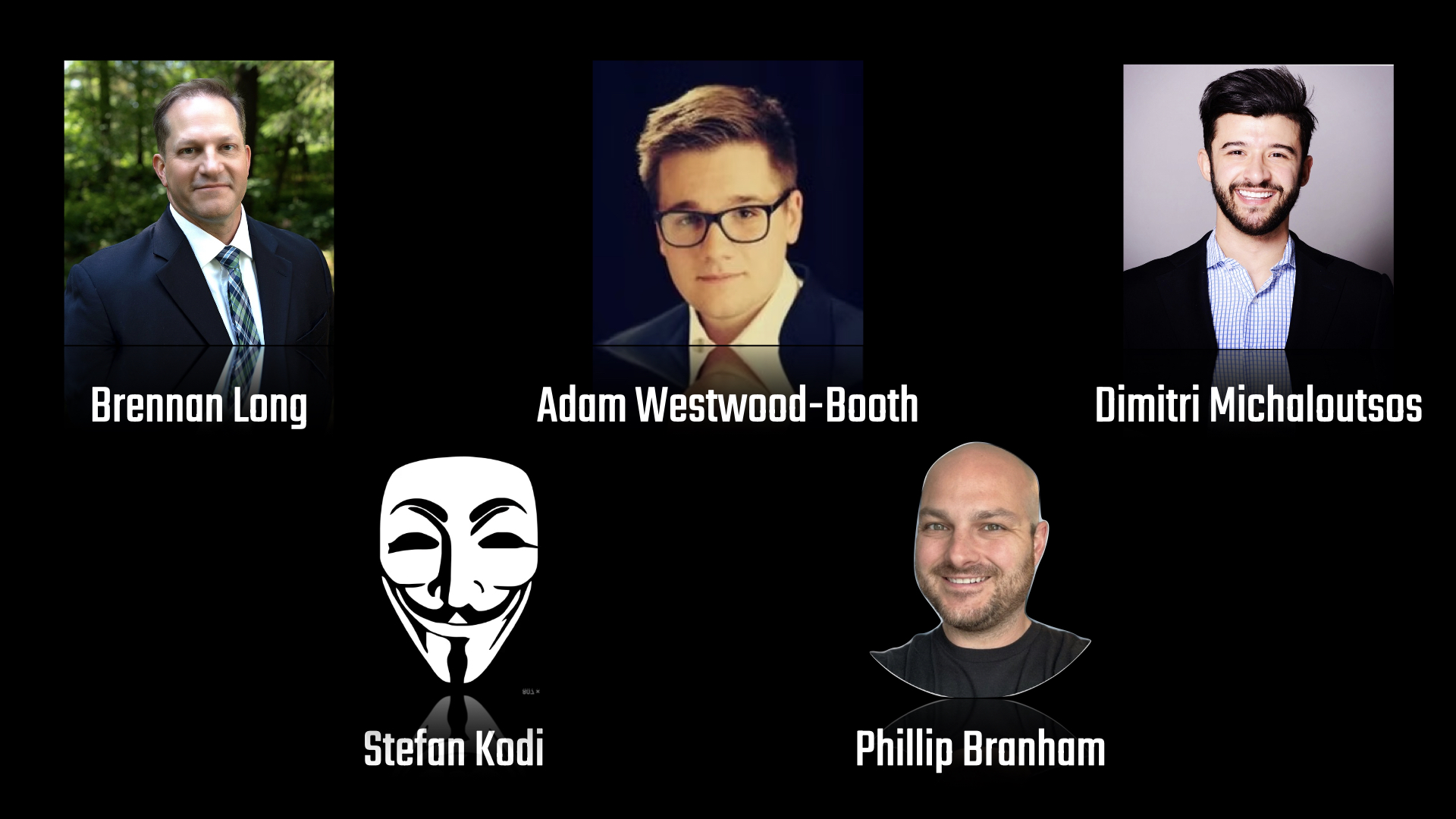
- Brennan Long (former FBI), AVP and team lead, compliance. Joined December 2024, left April 2025.
- Adam Westwood-Booth, head of compliance. Joined September 2024, left May 2025.
- Dimitri Michaloutsos, VP and global head of sanctions. Joined January 2025, left April 2025.
- Stefan Kodi (former U.S. government cyber officer), compliance officer. Joined March 2025, left May 2025.
- Philip Branham, AVP, transaction monitoring and trade surveillance. Joined January 2025, left April 2025.
Five compliance professionals, several with backgrounds in federal law enforcement and national security, all gone within months. The shortest tenure was two months; the longest, eight.
The sequence Michaloutsos describes is a familiar one to regulators. A compliance team is hired. It identifies serious legal problems. It escalates. The C-suite overrides it. The team is removed. In enforcement proceedings, the dismantling of a compliance function after internal dissent is frequently cited as evidence of knowledge and intent, the two elements that turn an infraction into an allegation of willful misconduct.
What the law says: the penalties
The legal exposure Arkham faces, if Michaloutsos's account is accurate, is substantial and spans several jurisdictions.
EU sanctions
Council Regulation (EU) 2022/263 prohibits EU persons and entities from doing business in or with the non-government-controlled areas of the Donetsk, Luhansk, Kherson and Zaporizhzhia oblasts. It has been strengthened repeatedly, the latest step being February 2025, when the EU's 16th sanctions package extended restrictions to crypto-asset service providers and banned EU operators from providing crypto services that could help Russia build alternative financial infrastructure.
Violations can bring criminal prosecution in member states, asset freezes and the loss of operating licenses. Michaloutsos says he showed Arkham's leadership a case study of a European company fined so heavily for sanctions violations that it went out of business.
U.S. sanctions (OFAC)
OFAC has become increasingly aggressive in enforcing sanctions against cryptocurrency platforms. The ShapeShift settlement ($750,000 for 17,183 violations, September 2025) and the Exodus settlement ($3.1 million for 254 violations, December 2025) both show that OFAC treats access from sanctioned jurisdictions as a violation even where the company does not itself process the transaction. As of April 2026 the maximum statutory penalty for a single violation was over $300,000, with no upper limit on the aggregate.
Given that Michaloutsos says he identified about 800 pings from Iran on a single day, the potential exposure from IP-blocking failures alone could be large.
FCPA exposure
Miguel Morel is a U.S. citizen. Under the Foreign Corrupt Practices Act, an American who participates in or authorizes the bribery of foreign officials faces criminal prosecution. Case 13 documented alleged bribery of Turkish regulators and the use of sex workers to secure business deals, all allegedly with Morel's knowledge. Combined with the sanctions conduct alleged here, that adds a further layer of potential personal liability for Arkham's CEO.
A pattern of conduct
Taken together, Cases 13 and 14 present a picture of a company that appears to treat legal and regulatory obligations as obstacles to be worked around rather than constraints to be respected.
In Turkey, the evidence appears to show regulatory capture: bribing officials, obtaining sealed government documents, and rewriting the rules to ease Arkham's market entry. In eastern Ukraine, it appears to show a company told by its own compliance team that its planned expansion would breach EU sanctions law, which pushed forward anyway. In Iran, it appears to show a platform that could not or would not stop users in a comprehensively sanctioned country from reaching its services. The compliance team that tried to prevent these outcomes was, according to the testimony presented here, fired.
Our view: these are not isolated incidents. If the accounts are accurate, they describe a culture in which compliance exists on paper but not in practice, the CEO's word overrides legal advice, and the people hired to keep the company within the law are removed when they try to do their jobs. The investors who backed Arkham may wish to consider what their continued association says about their own due diligence. The regulators in Denmark, the EU and the United States have a public record to examine.
How this fits the thread
This is the sixth Crypto Leaks case on Arkham, and the pattern it describes, objections raised inside the company and the business proceeding anyway, runs back through Case 13 (the "black ops" reporting line to Morel), Case 12 (the $275,000 paid to "FTX's PR people"), Case 9 (the CTO who "would do it anyway") and Case 2 (a report its own associates said was made to order). In each, Morel is at the center and the objectors leave.
What must happen now
The evidence presented in this investigation calls for action from several authorities.
- The Danish Financial Supervisory Authority (Finanstilsynet) should investigate whether Arkham's Danish subsidiary was involved in developing products or services aimed at EU-sanctioned territories, and whether the company complies with its Danish licensing obligations.
- The European Commission should examine whether Arkham's alleged conduct in eastern Ukraine violates Council Regulation (EU) 2022/263 and subsequent sanctions packages.
- The U.S. Treasury Department (OFAC) should investigate the alleged IP-blocking failures that permitted access from Iran and other comprehensively sanctioned jurisdictions.
- The U.S. Department of Justice should assess whether Miguel Morel's alleged conduct, as documented in Cases 13 and 14, warrants a Foreign Corrupt Practices Act investigation.
- Arkham's investors should demand a comprehensive, independent compliance audit of the company's operations in every jurisdiction.
Video evidence index
Sixteen clips are embedded above, in the order they appear. Each entry links to the clip on this page and to its file. Eleven further recordings from the same interview are not embedded; they are listed after the index and can be viewed in full.
- Michaloutsos: his role, "very high-risk jurisdictions" file
- Michaloutsos: "everything that exchange does becomes Danish" file
- Michaloutsos: "where you are when you're logging in" file
- Michaloutsos: the eastern Ukraine proposal and his warning file
- Michaloutsos: "get to a yes" file
- Michaloutsos: "they wanted to move forward with it anyway" file
- Michaloutsos: "tainted money they're looking to wash" file
- Michaloutsos: "the risk benefit reward just wasn't there" file
- Michaloutsos: "I'm sitting in Iran" file
- Michaloutsos: "go to the website in of itself is a violation" file
- Michaloutsos: "about 800 pings to Iran" file
- Michaloutsos: "they didn't love the idea" file
- Michaloutsos: "doesn't give a shit about compliance" file
- Michaloutsos: "compliance bears the responsibility" file
- Michaloutsos: "a checkbox ... someone to blame" file
- Michaloutsos: "They fired the compliance team" file
Also on file
- Michaloutsos cites Russia's formal annexation and passport replacement as evidence file
- Michaloutsos explains the FATF and Basel Institute risk assessments he presented file
- Michaloutsos explains his reporting chain to the CCO and CEO file
- Describes compliance as a "check the box function" at Arkham file
- Michaloutsos says he thought the eastern Ukraine proposal was a joke file
- Confirms the product was "specifically targeted" at sanctioned territories file
- Michaloutsos explains the consequences of ignoring sanctions file
- "We read the memo. We don't care. We went forward with product anyway" file
- Michaloutsos explains the legal concept of business risk ownership file
- "The only people in eastern Ukraine who have money are the people who are looking to launder it" file
- Describes the inadequacy of Arkham's ring-fencing controls file